How to get cash from Bitcoin without selling
Fund dollars, earn on stables, or draw liquidity against Bitcoin without selling your stack. How self-custody cash flow works in Xverse.
Story details
Topics
Author(s)
Janlo van den HeeverPublished
September 14, 2026
Sign up for updates!
Stay tuned to our latest news and updates
.svg)
You hold Bitcoin and you are not selling. Rent is still due. So is the invoice. The usual bridge is a sell: dispose BTC, take the taxable event, lose the position, hope to buy back later at a higher price.
You do not have to do that.
Three self-custody paths keep your Bitcoin intact while dollars show up where you need them. Fund a separate dollar layer with stablecoins. Borrow stablecoins against BTC as collateral. Spend from that dollar layer at merchants. All three work under your keys in Xverse today. One principle holds across all of them: BTC stays the long position. Dollars live in a separate layer. Only collateralize BTC when you understand liquidation risk.
Why selling is still the default
Selling is simple. It is also permanent for that lot. You give up upside on the hardest asset in crypto. In most jurisdictions you create a capital gains event the moment you dispose. And the "cash out" flow on a custodial exchange pulls your coins through an account someone else controls: withdrawal windows, verification holds, freeze risk that does not surface until you need the money fast.
Guides that rank for "cash from bitcoin without selling" today teach the same core mechanic: keep BTC, take liquidity another way. Most ask you to re-custody your Bitcoin with a lending desk or centralized platform to do it. That is a tradeoff, and for some people it is the right one.
But if you left a custodial exchange because you wanted your keys, sending coins back to a custodial loan desk undoes the point. Xverse is built so the liquidity paths work under self-custody. Keys stay on your device. No intermediary holds the stack.
The paths at a glance
Fund a dollar layer (Xverse Cash). Live today. Hold stablecoins next to your BTC. Fund via bank deposit, card, Apple Pay, or stablecoin transfer. Spend or send from that balance without touching Bitcoin.
Borrow against Bitcoin. Live today via Vesu on Starknet. Deposit WBTC as collateral, borrow USDC against it. Your collateral earns supply yield while deposited. Your BTC exposure stays whole. You skip the taxable sell event and access liquidity.
Spend without selling. Lightning payments on Square terminals are live worldwide. Card spending is waitlist only. Until the card ships, Cash pay flows and Lightning cover payments.
Earn on the stack while you wait. Live today. Bitcoin-aligned yield on BTC and stablecoins through L2 protocols. Variable rates, not guaranteed. Earning on idle assets means you tap collateral less often when you actually need cash.
Path 1: Fund a dollar layer (Xverse Cash)
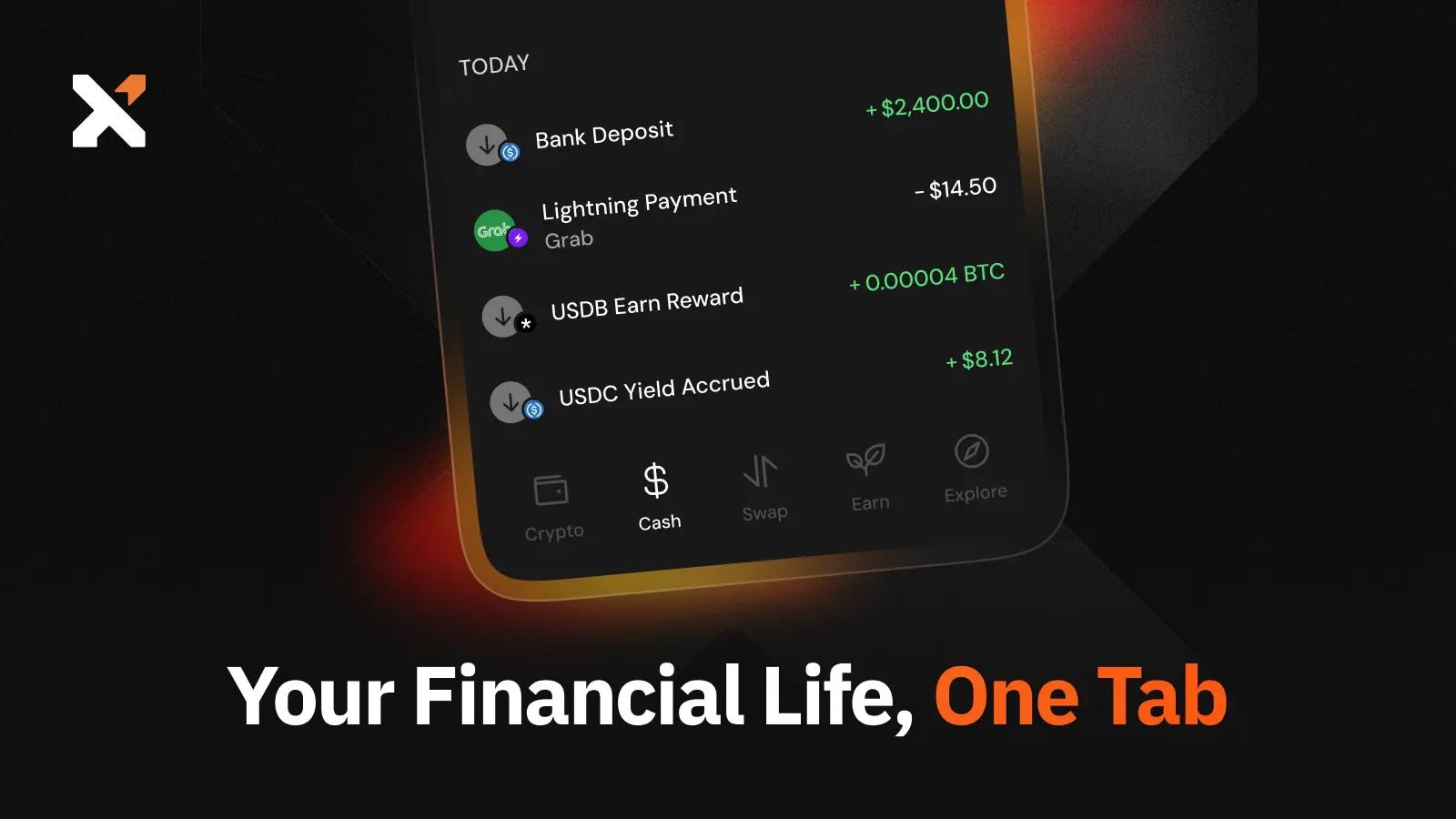
Xverse Cash is the dollar layer inside Xverse. It holds stablecoins, shows purchasing power in dollars, and lets you fund, pay, convert, and earn without touching your Bitcoin position.
Ways to fund Cash (all live):
Transfer stablecoins you already hold. USDC on Starknet, USDB on Spark, USDCx on Stacks, depending on the route.
Buy with card, bank transfer, or Apple Pay through the in-app onramp.
Direct deposit to a virtual bank account via Due. ACH, Fedwire, or SWIFT. Dollars arrive as USDC on Starknet.
Bring assets from other chains via portfolio swap when you need to consolidate.
Using Cash for payments: Where the Due cashout path is enabled, Cash supports withdrawing USDC to your bank and sending cash to a bank from Pay. Together with the live bank-deposit onramp, that creates a loop: deposit dollars to USDC, then USDC back to a bank when you need it. Native Due bank-to-bank as a single product is still deferred. Cohort and feature availability may vary.
Deeper read: Xverse Cash: The Dollar Layer for Bitcoin.
Who this is for: holders who already have (or can fund) a dollar balance and want self-custodial spending power next to cold or warm BTC.
Who this is not for: anyone who needs a full fiat salary bank with deposit insurance. Xverse is an onchain Bitcoin platform, not a licensed deposit-taking bank.
Path 2: Borrow against Bitcoin
This is what search results usually mean by "borrow against Bitcoin." With Xverse you can borrow against your Bitcoin and get cash through USDC liquidity. The flow is built into the app: no external dApps, no DeFi literacy required.
How it works:
You deposit WBTC as collateral into a Vesu lending pool on Starknet.
You borrow USDC against that collateral. The USDC arrives in your Xverse vault.
Your collateral earns supply yield while deposited. The cost of borrowing can be partially offset by what the collateral earns.
You keep full price exposure to Bitcoin. Your stack stays whole. You skip the taxable sell event.
Managing the position: Xverse tracks your loan-to-value ratio with visual indicators. You can repay partially or fully, borrow more against the same collateral, add collateral to reduce your LTV, or remove collateral when the ratio allows it. All from the Earn tab in Xverse.
The risk you must size before you start. If BTC price drops and your loan-to-value ratio blows through the protocol threshold, you can be liquidated. That liquidation can create the exact taxable sale you were trying to avoid. Every serious guide on collateralized borrowing stresses conservative LTV for a reason. Start smaller than the maximum. Plan a repayment path before you draw. Collateralized liquidity is not free money. If you cannot absorb a significant drawdown without liquidation, reduce the position or skip this path entirely.
The self-custody difference: your BTC does not sit on a centralized lending desk waiting for a platform decision. Protocol rules are visible onchain. Liquidation thresholds are public, not buried in terms of service. Vesu is a DeFi lending protocol on Starknet with published parameters. That is a different trust assumption from a custodial loan desk, and a smaller one, but it is not zero. Smart contract risk exists. Anyone who tells you onchain lending is risk-free is selling something.
Path 3: Spend without selling
Most people sell crypto to spend it. Self-custodial spending flips that: pay from a dollar layer funded separately from your BTC position, or pay directly via Lightning.
Lightning payments on Square terminals: live worldwide. Any merchant running a Square terminal can accept Lightning. This is the live spending path today. You pay from your Lightning balance without selling the BTC sitting in your vault.
Xverse Card: waitlist only. A self-custodial card that spends stablecoins from Cash, or (where enabled) draws liquidity against BTC at the point of spend. Do not plan payroll or travel spend on a card you do not have yet. Join the waitlist.
Until the card ships, Cash pay flows (send dollars onchain to an address or QR) and Lightning cover payments. The gap is merchant coverage outside Square terminals and the card network. That gap closes when the card ships.
Path 4: Earn on the stack while you wait
If you need cash later, not today, earning on assets you already hold cuts how often you need to collateralize.
Xverse Earn routes you into Bitcoin-aligned yield on BTC and stablecoins through Layer 2 protocols. Stacks stacking for BTC rewards every two-week cycle. BTC staking via BOB. Stablecoin strategies with full visibility into rates before you commit. Assets stay under your control in the self-custody model.
Yields are variable and never guaranteed. No APY number appears in this article on purpose. The point is not a rate pitch. The point is that idle assets can work while you wait, so you draw against collateral less often.
For the full walkthrough: Xverse Earn.
Self-custody vs custodial loan desks
Who holds keys: Self-custodial onchain path: you hold keys on your device. Custodial loan desk: the platform holds keys or requires deposit to their custody.
Freeze risk on your BTC: Self-custodial: no intermediary can freeze coins under your keys. Custodial: platform policies can restrict accounts, delay withdrawals, or freeze balances.
Liquidation visibility: Self-custodial: protocol rules visible onchain, thresholds public, parameters published. Custodial: platform rules, often opaque, sometimes changed with notice buried in terms updates.
Speed: Self-custodial: network and protocol dependent. Custodial: often faster UX, but that speed comes with a higher trust assumption.
Fit: Self-custodial: holders who left custodial platforms for a reason and will not go back. Custodial: holders comfortable with counterparty risk in exchange for convenience.
Custodial lending desks win a lot of "cash without selling" search results because they answer the question in one landing page. They also ask you to trust custody or a hybrid model. Xverse takes the other side: banking utility without handing over keys. That is the Bitcoin bank thesis.
A simple decision tree
- Need dollars in the next day and you can fund stablecoins or wire fiat? Start with Cash.
- Need recurring merchant spend? Join the Card waitlist. Use Cash pay and Lightning on Square terminals in the meantime.
- Need a larger sum against BTC and you accept liquidation risk? Use the Borrow path at a conservative LTV, with a repayment plan.
- Need to grow the stack before you tap it? Activate Earn on idle BTC and stablecoins.
- Still unsure? Do not sell under pressure. Fund a small Cash buffer first. Revisit collateral later.
Tax note (not advice)
In many jurisdictions, selling BTC is a taxable disposal. Borrowing against BTC often is not, until liquidation or another disposal event. Rules vary by country and they change. This is education, not tax advice. Talk to a professional before you size a loan against a long-term position.
What Xverse does not claim here
Xverse is not a licensed deposit-taking bank. There is no deposit insurance on Bitcoin held in self-custody or on stablecoins held in Cash.
No APY or TVL number appears in this article. Yield is variable and not guaranteed.
Card spending is waitlist only. Do not plan around a product you do not have yet.
Dollar rails (onramp, virtual accounts, bank withdrawals) run through regulated partners like Due. Those are custodial touchpoints even when your Bitcoin keys are not. Partner availability, fees, and compliance rules apply.
Collateralized borrowing carries liquidation risk. A large BTC drawdown at high LTV can wipe collateral and create the taxable event you were trying to avoid. Start conservative. Plan repayment. This is not free money.
Start here
Download Xverse (or xverse.app)
Open Cash and fund a dollar balance: Cash explainer
Read the product hub: Bitcoin bank and Onchain bank
Join the Card waitlist
Your keys. Your vault. Live on Bitcoin.
Can I get cash from Bitcoin without selling it?
Yes. Three paths: fund a separate dollar layer with stablecoins (Xverse Cash), borrow stablecoins against BTC as collateral via Vesu on Starknet, or spend via Lightning at Square terminals. All work under self-custody in Xverse.
What is Xverse Cash?
The dollar layer inside Xverse. It holds stablecoins, shows dollar purchasing power, and lets you fund via bank deposit, card, Apple Pay, or stablecoin transfer. You spend from Cash without touching your Bitcoin position.
Can I borrow against Bitcoin in Xverse?
Yes. Deposit WBTC as collateral into a Vesu lending pool on Starknet and borrow USDC against it. Your collateral earns supply yield while deposited. Liquidation risk applies if BTC price drops through the protocol threshold. Start at a conservative loan-to-value ratio.
Is the Xverse Card live?
Waitlist only. Join here. Until the card ships, Lightning on Square terminals and Cash pay flows are the live spending paths.
Does selling Bitcoin trigger a taxable event?
In most jurisdictions, yes. Borrowing against BTC often does not, until liquidation or another disposal event. This is education, not tax advice. Consult a professional for your jurisdiction.
Is Xverse self-custodial?
Yes. Keys stay on your device. Xverse cannot spend your coins, freeze your balance, or hand your transaction history to a third party. Dollar rails through partners like Due are custodial touchpoints. Your BTC keys are not.
What yield can I earn on Bitcoin in Xverse?
Xverse Earn offers Bitcoin-aligned yield on BTC and stablecoins through L2 protocols. Rates are variable and never guaranteed. No APY is quoted in this article on purpose.
How does self-custodial borrowing differ from a custodial loan desk?
You hold keys. Protocol rules are visible onchain. Liquidation thresholds are public. A custodial desk holds your coins, sets its own rules, and can restrict your account. The tradeoff: custodial desks often have simpler UX. The self-custodial path carries smart contract risk instead of counterparty risk.
Can I spend Bitcoin at merchants through Xverse?
Lightning payments on Square terminals are live worldwide. Card spending at other merchants is waitlist only. Cash pay flows cover onchain dollar payments in the meantime.
Disclaimer: Xverse is self-custodial software, not a licensed deposit-taking bank. Stablecoin values can deviate from $1. Yield is variable and not guaranteed. Virtual account services are powered by partners such as Due. Onchain borrowing through Vesu on Starknet carries liquidation risk and smart contract risk. Card spending is waitlist only and depends on region and rollout. Dollar rails through partners are custodial touchpoints; partner compliance rules apply. This page is educational and is not financial, tax, or investment advice.


.svg)

Related articles

sBTC Staking Explained: How to Earn Stacks Bitcoin Rewards on Bitcoin
Every way to earn on Bitcoin has asked you for the same thing first. Wrap it into something else. Bridge it somewhere else. Or send it to a company that pays you interest right up until the week it stops. Bitcoin staking on Stacks does not work that way.