Xverse vs Revolut: Un-Bank your Bitcoin
Leave the old system behind. Banking fully onchain is becoming viable. Xverse keeps Bitcoin keys on your device, with Earn and Cash under self-custody.
Story details
Topics
Author(s)
Janlo van den HeeverPublished
September 13, 2026

Sign up for updates!
Stay tuned to our latest news and updates
.svg)
Revolut has 75 million customers and earned every one of them. The UX is fast, Apple Pay works, and for everyday fiat the all-in-one experience is genuinely better than most banks.
None of that changes what the crypto tab is: a custodial IOU attached to a honeypot.
On 12 September 2026, Revolut confirmed it had released customer data after a fraudulent request passed through a real government agency's email infrastructure. The disclosed materials reportedly included passport copies, KYC verification selfies, and Bitcoin transaction histories. One firm. Identity documents, a map of your stack, and the coins. When those layers sit together and a process path fails, identity exposure and custody risk compound.
This is not an argument against Revolut for fiat life. It is the custody decision for Bitcoin you refuse to sell.
What happened on 12 September 2026
Revolut confirmed it released customer information to an unauthorized party after receiving a request from what appeared to be a legitimate government agency's email domain. The company said customer funds were unaffected and accounts remained secure. It blocked the fraudulent address, notified regulators, and applied protection measures for those affected. Revolut did not name the government agency or specify which markets were involved.
The durable problem is not one incident. It is the architecture. A custodial neobank that holds KYC files, transaction maps, and crypto keys creates a single target for exactly this kind of request. A path that works once can be tried again. The lesson is structural and it applies to any platform holding identity, activity data, and assets in the same stack.
What the two models are
A custodial neobank gives you bank-like fiat rails and holds crypto as an IOU. You instruct transfers. You do not control private keys.
A self-custodial Bitcoin bank keeps Bitcoin keys on your device and connects onchain earn, swap, dollar access, and Lightning. Fiat partners still touch dollars and cards, and they still collect identity where regulation requires it. The win is keys on the BTC sleeve, not a claim of zero KYC footprint.
One sentence: custodial neobanks hold your Bitcoin keys. Xverse keeps them on your device.
What Xverse does not replace: Apple Pay habits and global all-in-one fiat coverage. A mature card spending network (spending is still under development, except Lightning payments on Square terminals worldwide).
Custodial neobank vs self-custodial Bitcoin bank
Model: Custodial neobank = crypto-friendly fintech that holds your assets. Xverse = self-custodial Bitcoin bank (Un-Bank). Keys on your device.
Custody of Bitcoin: Custodial neobank: platform or nominee holds keys. Xverse: keys on your device.
Freeze / block risk on BTC: Custodial neobank: account and policy controls can restrict crypto. Xverse: app cannot move coins it does not hold. Onramp and card partners still have their own KYC rules.
Identity / data surface: Custodial neobank: passport, KYC, activity, and coins concentrated with one intermediary. Xverse: partner KYC scoped to that fiat rail. BTC seed stays on device.
Where it wins: Custodial neobank: UX, Apple Pay, global coverage, all-in-one fintech. Xverse: Bitcoin-native earn, Cash, Lightning, multi-L2 under self-custody.
Where it presses you: Custodial neobank: custodial freeze risk, crypto secondary, honeypot of identity and asset maps. Xverse: spending still under development (Lightning on Square terminals is live), Borrow not widely open, USDC to bank where enabled.
Hours: Custodial neobank: mature app UX, banking partners, support hours. Xverse: onchain rails 24/7. Fiat bits follow partner hours.
BTC yield source: Custodial neobank: product-dependent, counterparty with the platform. Xverse: onchain L2 protocols via Earn (not bank interest). Rates variable, not guaranteed.
Card / spending: Custodial neobank: mature card and bank-like rails. Xverse: spending under development. Lightning payments on Square terminals live worldwide. Instant accounts available.
Live Bitcoin utility: Custodial neobank: crypto tab inside a fintech app. Xverse: Cash bank deposit (live), USDC to bank where enabled, Earn, Lightning/Spark, Swap.
Where the old system presses you on Bitcoin
Concede what is true. A mature neobank wins everyday fiat. UX, Apple Pay, global coverage, and an all-in-one app are real advantages.
For Bitcoin, the picture changes. Keys sit with the platform or a sub-custodian. You do not hold a seed phrase for that balance. Crypto is a secondary feature inside a fintech product, not a Bitcoin-native stack. Custodial balances can be restricted by platform rules at any time. That is freeze risk on coins you do not control.
The September 2026 disclosure added a data dimension. Revolut crypto wallets reportedly hold over $4.2 billion and crypto transactions on the platform rose 50 percent in the last reporting period. Passport files, selfies, and BTC transaction histories sitting with one intermediary create a permanent target when a request path fails. That concentration is the structural issue, and it does not go away when one incident is patched.
Spreads and withdrawal rules vary by plan and region. This page does not quote fee percentages. Verify live fees in Revolut's official sources before acting.
What Xverse is
Xverse is a self-custodial Bitcoin vault and onchain banking layer across Bitcoin L1 and Layer 2s: Stacks, Starknet, and Spark. Banking fully onchain is the product direction. Xverse is the best alternative to Revolut for pure onchain Bitcoin-focused banking and finance.
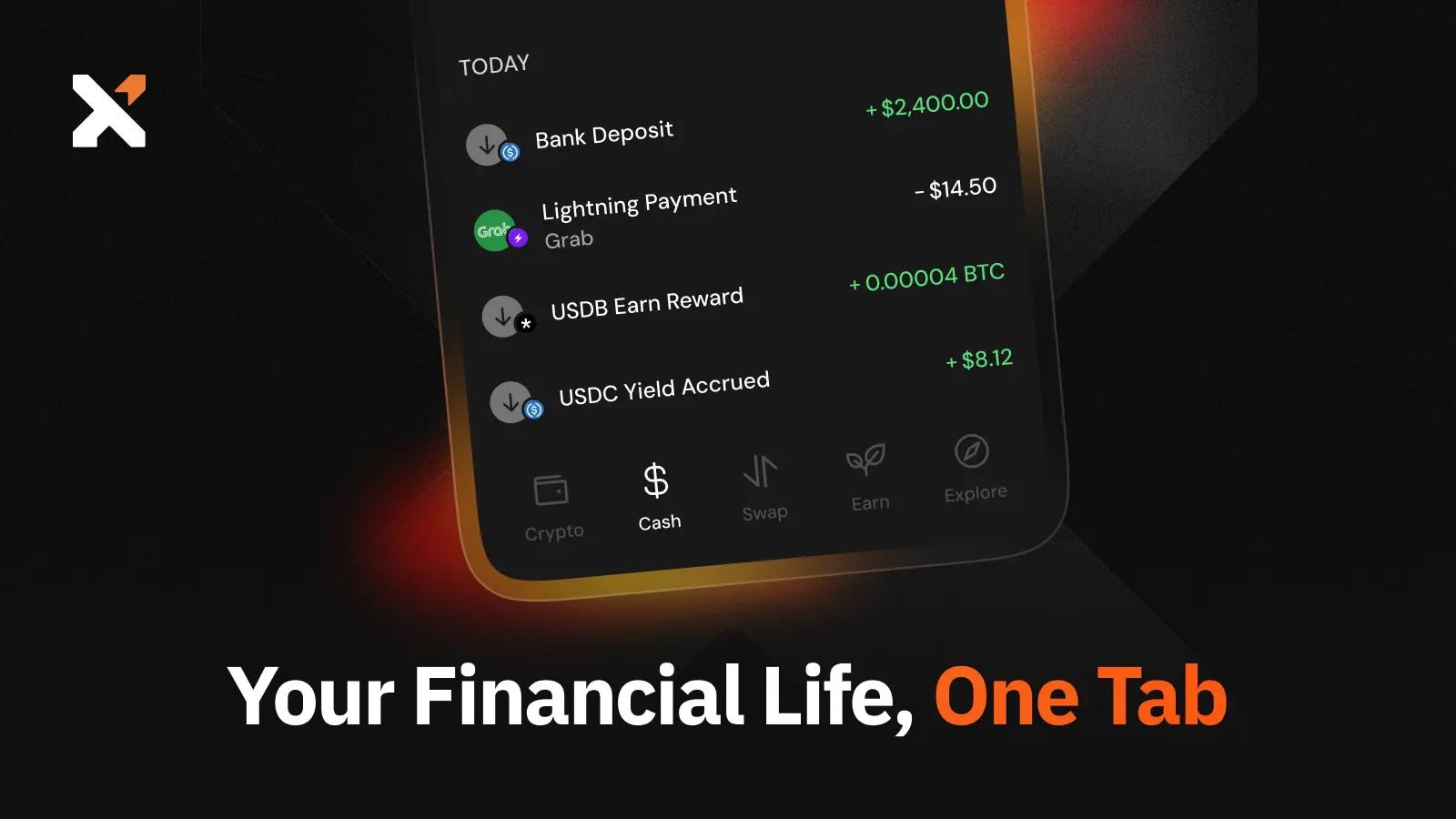
Live today: Cash (dollar layer via Due), Earn, onramp, Lightning and Spark payments, Swap. Hardware signing with Ledger or Keystone when you connect them.
Spending: Lightning payments on Square terminals are live worldwide. Card spending is coming.
Cash rails: Bank deposit into Cash is live via Due. Sending USDC out to a bank is available where your account is enabled, not for everyone yet. Cross-border bank-to-bank via Due is not live. Check the app for what your account supports, and verify fees there.
KYC on dollar rails: KYC is currently required for onramping and global virtual accounts. That is it. Partner KYC is scoped to that rail. It does not give that company your Bitcoin keys. You can KYC for a dollar rail and still keep Bitcoin under your keys.
Borrow: With Xverse you can borrow against your Bitcoin and get cash through USDC liquidity.
Earn: Your Xverse vault stays under your keys. Some Earn paths use a pool or protocol contract while a position is active. Read the in-app disclosure for that product before you deposit.
Cash and USDC: Dollar balances and cashout rails follow partner and stablecoin rules. They are not freeze-proof the way Bitcoin under your keys is.
More on the product: Learn more about Banking on Bitcoin
What Xverse does not replace
Apple Pay habits and global all-in-one fiat coverage. A mature card spending network: spending is still under development, except Lightning payments on Square terminals worldwide. A full traditional banking stack as your only account. Open Borrow for every user: USDC to bank is available only where your account is enabled, not for everyone yet. A KYC-free fiat surface: onramping and global virtual accounts still require identity verification.
Bringin and peers may still win "self-custody plus Euro IBAN plus card" in the EEA. Xverse's wedge is different: Bitcoin-native utility under keys on your device. Instant accounts, great UX, multi-L2, Earn, Cash, Lightning, portfolio.
The custody decision
Search results for this query usually compare whether the neobank or the self-custody platform holds the keys. September 2026 sharpened the fork. When a single request path surfaces KYC packages and Bitcoin activity together, identity risk and custody risk compound even if private keys technically never leave the custodian's infrastructure.
On a custodial neobank, crypto can be restricted by platform rules. You instruct. You do not control keys.
On Xverse, private keys stay on your device. Xverse cannot spend your coins or freeze a self-custody balance it does not control.
The partner nuance matters: onramps and global virtual accounts require KYC through regulated partners. Dollar rails are never "trustless euros." Freeze language here is about self-custody BTC, not a promise that every partner rail is unfreezable.
Keep Bitcoin you refuse to sell in self-custody. Use partner rails for dollars and cards when you need them, without that balance sitting as an IOU.
Hours, yield, and banking without a bank charter
Custodial neobanks run on bank-like hours, support playbooks, and fiat rails. Xverse runs on network time.
Yield through Earn is onchain L2 yield, not a bank interest rate. Rates are variable and not guaranteed. This page does not quote an APY or TVL.
Xverse is not a licensed deposit-taking bank. There is no deposit insurance on Bitcoin held in self-custody. Banking fully onchain is the product direction, not a bank charter claim.
Practical path: Un-Bank the Bitcoin sleeve
- Decide which BTC you will not leave as an IOU.
- Withdraw that BTC from custodial platforms when your plan and region allow (verify in-app).
- Receive into Xverse (verify the address on device or hardware).
- Activate live products: Cash, Earn, Lightning/Spark, Swap.
- Optional: spend via Lightning on Square terminals. Card spending is coming.
Fiat life can still use whatever rails you already trust. KYC for a dollar rail if you need it. Keep the Bitcoin sleeve under your keys.
Who for what
Salary, travel card, Apple Pay, everyday fiat: Mature neobank or fintech.
Euro IBAN + card next to a self-custody BTC vault in the EEA: Bringin (and similar EU loops).
Bitcoin-native earn, Cash, Lightning, multi-L2 under self-custody: Xverse (Un-Bank the stack).
Cold storage only: Hardware device. Apps are optional layers.
Should I keep Bitcoin on a custodial neobank?
If you will not sell it and you care about keys, no. Use a neobank for fiat life if it works. Do not treat the crypto tab as a vault.
Does the September 2026 data exposure mean I should move funds immediately?
No. Treat widely discussed incident details as reportedly true until primary sources settle. The durable lesson is structural: one firm holding passport files, a stack map, and coins is a concentrated target. Move the BTC sleeve you refuse to leave as an IOU when you are ready, with addresses verified on device.
Is Xverse a bank?
Xverse is a self-custodial Bitcoin platform with onchain banking utility. It is not a licensed deposit-taking bank with deposit insurance. Banking fully onchain is the product direction, not a bank charter claim.
Can Xverse freeze my Bitcoin?
Xverse cannot freeze or move Bitcoin under your keys in a self-custody account it does not control. Partner rails for onramp, virtual accounts, and cards can still apply their own compliance rules. Cash and USDC on partner rails are not immune to partner freezes.
Can I spend Bitcoin through Xverse?
Lightning payments on Square terminals are live worldwide. Card spending is under development. Spending without selling is the direction.
Is Xverse KYC-free?
No. KYC is required for onramping and global virtual accounts. Self-custody means who holds the keys, not who never asked for ID. You can KYC for a dollar rail and still keep Bitcoin under your keys.
Can I earn yield on Bitcoin in Xverse?
Yes, through Earn and Bitcoin-aligned onchain L2 protocols. That is not bank interest. Yield is variable and not guaranteed. No APY is quoted here.
Does a custodial neobank give you real Bitcoin or an IOU?
Custodial crypto models mean you do not hold the keys for that balance. Read the platform's current terms for the exact nominee and custody wording.
Can a neobank freeze or block your crypto?
A custodial neobank can apply platform rules to balances it holds. Coins under your keys in self-custody cannot be moved by the app publisher.
Start here
Download Xverse (or xverse.app)
What is a Bitcoin bank?
How to use Xverse Cash
How to Earn in Xverse
Leave the old system behind for the sleeve that matters. Your keys. Your vault. Bank on Bitcoin.
Disclaimer: Educational only, not financial advice. Crypto and stablecoin values move. Yield is variable and not guaranteed. Card and Borrow depend on region and rollout. Cash: Due onramp is live; USDC to bank may only be available for some accounts; bank-to-bank via Due is not live yet. Verify fees before quoting. Verify custodial platform fees and withdrawal rules in official sources before you act. Details about the mid-September 2026 Revolut data-exposure story are based on what was widely discussed publicly; this page is not an incident report and does not claim every user was affected. Partner rails are custodial by nature even when Bitcoin keys are not; KYC applies on onramping and global virtual accounts. Cash and USDC on partner rails can be subject to partner rules. Some staking and pool designs involve protocol contracts while a position is active; read the in-app disclosure for that product.


.svg)

Related articles
sBTC Staking Explained: How to Earn Stacks Bitcoin Rewards on Bitcoin
Every way to earn on Bitcoin has asked you for the same thing first. Wrap it into something else. Bridge it somewhere else. Or send it to a company that pays you interest right up until the week it stops. Bitcoin staking on Stacks does not work that way.