Why Bitcoin Privacy Matters & How Starknet Makes It Possible
Bitcoin is pseudonymous, not anonymous. Every transaction is permanently public, and chain analysis firms can link addresses to real identities. Starknet's new privacy upgrade lets users shield any Starknet token, including strkBTC, for private Bitcoin transactions and balances.
Story details
Topics
Author(s)
Janlo van den HeeverPublished
May 22, 2026
Sign up for updates!
Stay tuned to our latest news and updates
.svg)
TL;DR
- Bitcoin is pseudonymous, not anonymous. Every transaction is permanently public, and chain analysis firms can link addresses to real identities.
- Privacy is a baseline financial right and the foundation of self-custody, censorship resistance, and personal sovereignty.
- Bitcoin's existing privacy tools (CoinJoin, Lightning, Taproot) can help, but each has limitations.
- Starknet's new privacy upgrade lets users shield any Starknet token, including strkBTC, for private Bitcoin transactions and balances, with quantum-resistance built in.
- Xverse is the leading self-custodial wallet supporting Starknet, making it the simplest way for Bitcoin holders to access true on-chain privacy without giving up their keys.
The Privacy Paradox of "Digital Cash"
Bitcoin's privacy is commonly misunderstood: while you don't have to tie your personal information to your address, it can nevertheless be tracked down. This is where the message of Bitcoin being pseudonymous, rather than anonymous, comes from.
Pseudonymity is the trade-off between security and privacy, among other things. If you buy BTC through an exchange that requires KYC, your real identity is linked to every future address you spend from. This is offset by the fact that KYC-stringent exchanges are much more secure and are usually regulated in many jurisdictions.
Additionally, public donations, salary payments, and on-chain purchases all create a permanent financial record that anyone can inspect.
Of course, this doesn't mean you should skimp on security. Using a self-custodial wallet and keeping your seed phrase secure in a physical location are both always important. However, your self-custodial wallet isn't exempt from this same practice of tracking Bitcoin addresses.
Unfortunately, 17 years after its inception, Bitcoin's transparency (once a huge selling point and even one of the pillars of blockchain as a whole) has become a liability for everyone, including everyday users, businesses accepting bitcoin, and high-net-worth HODLers.
Why Privacy Matters (Beyond "I Have Nothing to Hide")
It's only natural that a person's knee-jerk reaction to Bitcoin's transparency should be, "I have nothing to hide." After all, everything from traceability to KYC procedures is put into place to be able to catch malicious actors more easily and prevent the misuse of BTC in shady endeavors.
However, privacy is a matter of sovereignty, which is in turn a matter of principle, rather than a niche concern. Having your holdings widely available and traceable is a legitimate security concern.
Physical attacks on known crypto holders are rising to the point where Bitcoin advocate Jameson Lopp has made a list of attacks on crypto holders. He notes that the list is far from exhaustive, because many attacks aren't publicly reported. And although the list goes back to 2014, scrolling down through it shows a rising concentration of dates between 2024 and 2026. In this matter, the case for privacy becomes very immediate and pressing.
When it comes to businesses, privacy can be as simple as a business decision. After all, if competitors and suppliers alike can see every payment, how are businesses expected to keep operating? A simple consideration that goes without saying in traditional business operating models suddenly disappears if they want to move to crypto-friendly strategies.
Finally, privacy is what makes self-custody actually meaningful. "Not your keys, not your crypto" is a starting point, but privacy is where this principle is put to the test. Without it, sovereign assets can still be deplatformed at the bank, employer, or even merchant level.
Privacy is also at the heart of the Bitcoin ethos. Hal Finney, Adam Back, and other cypherpunks have all framed privacy as an essential part of digital money.
As Ken Liao, CEO of Xverse, states, "Self-custody without privacy is half the promise. You hold the keys, but anyone with an internet connection can audit your balance. True sovereignty means controlling who sees your money, not just who can move it."
Privacy lets bitcoin holders retain even more control over their funds than they otherwise would.
The Privacy Landscape: Zcash, Monero, and Bitcoin's Limitations
We've said that the lack of privacy regarding Bitcoin is becoming a sore spot now, after 17 years, but that's not entirely true. Bitcoin's transparency has been widely criticized even in the years after its launch, which is why several different solutions currently exist.
The first example is Monero (XMR). Built to include privacy by design, Monero uses ring signatures, stealth addresses, and RingCT to ensure strong privacy by default, making it virtually untraceable. However, it comes with its own trade-offs: significantly smaller liquidity than Bitcoin, fewer integrations (and therefore a much smaller ecosystem), and it's harder to off-ramp. A large part of this is the fact that its privacy makes it face challenges with regulatory scrutiny.
Another example is Zcash (ZEC). At its core, it's built around zk-SNARKs and shielded pools, both of which are used to anonymize transactions. A key difference is that its privacy features are completely optional: users can opt in or out of them as they wish. However, this optionality also means that most ZEC transactions are still publicly available.
Bitcoin itself wasn't sitting idle on the sidelines when improvements were being proposed and made. There are a few options that are native to Bitcoin, like crypto mixer CoinJoin that mixes inputs from multiple users into a single transaction to break the link between senders and receivers, Lightning Network, which uses onion routing and avoids public ledger records for transactions, and Taproot/Schnorr signatures that provide signature aggregation and hide complex transaction conditions.
While all of these offer their own solution to the privacy problem, they all come with caveats as well.
For example, CoinJoin requires coordinators and active management to function. Lightning is opt-in, which is an extra step, and channels can still leak metadata, so it's imperfect. Finally, Taproot improves privacy at the signing level but doesn't hide amounts or recipients. Steps are made in the right direction, but they're not quite as easy as most users would prefer.
Bitcoin has held the security and decentralization crown for a decade. Unfortunately, it's also made its trade-off, lagging behind purpose-built privacy chains consistently.
Why Bitcoin Layer 2s Are the Privacy Breakthrough
Bitcoin Layer 2s are elegant solutions to a variety of different problems.
Bitcoin's base layer optimizes for security and decentralization. Adding privacy (regardless of which solution would be implemented, with the premise that a perfect solution even exists) means hard forks, larger signatures, and a host of other trade-offs that may not be acceptable to Bitcoiners and therefore may never even see the light of day without enough support.
Layer 2s are protocols built on top of the Bitcoin base layer to address perceived issues without affecting the base layer directly. This opens up a host of advanced features that users can opt into, including smart contracts, yield-generating opportunities, and yes, even privacy.
For BitcoinFi to thrive, Ken Liao believes, a multimodal approach is necessary. This could mean Stacks for smart contracts, the Lightning Network for instant payments, and Starknet for ZK-powered privacy and scale.
Starknet is uniquely positioned to solve this problem.
As a Layer 2 that started out as a scaling solution for Ethereum and also moved to Bitcoin in order to become Bitcoin's execution layer, Starknet is a ZK-rollup with native support for advanced cryptography. Simply put, it prioritizes privacy, scalability, and security for DeFi.
How Starknet's Privacy Upgrade Works
Starknet's new privacy upgrade enables asset shielding for any Starknet tokens, including wrapped Bitcoin variants like strkBTC.
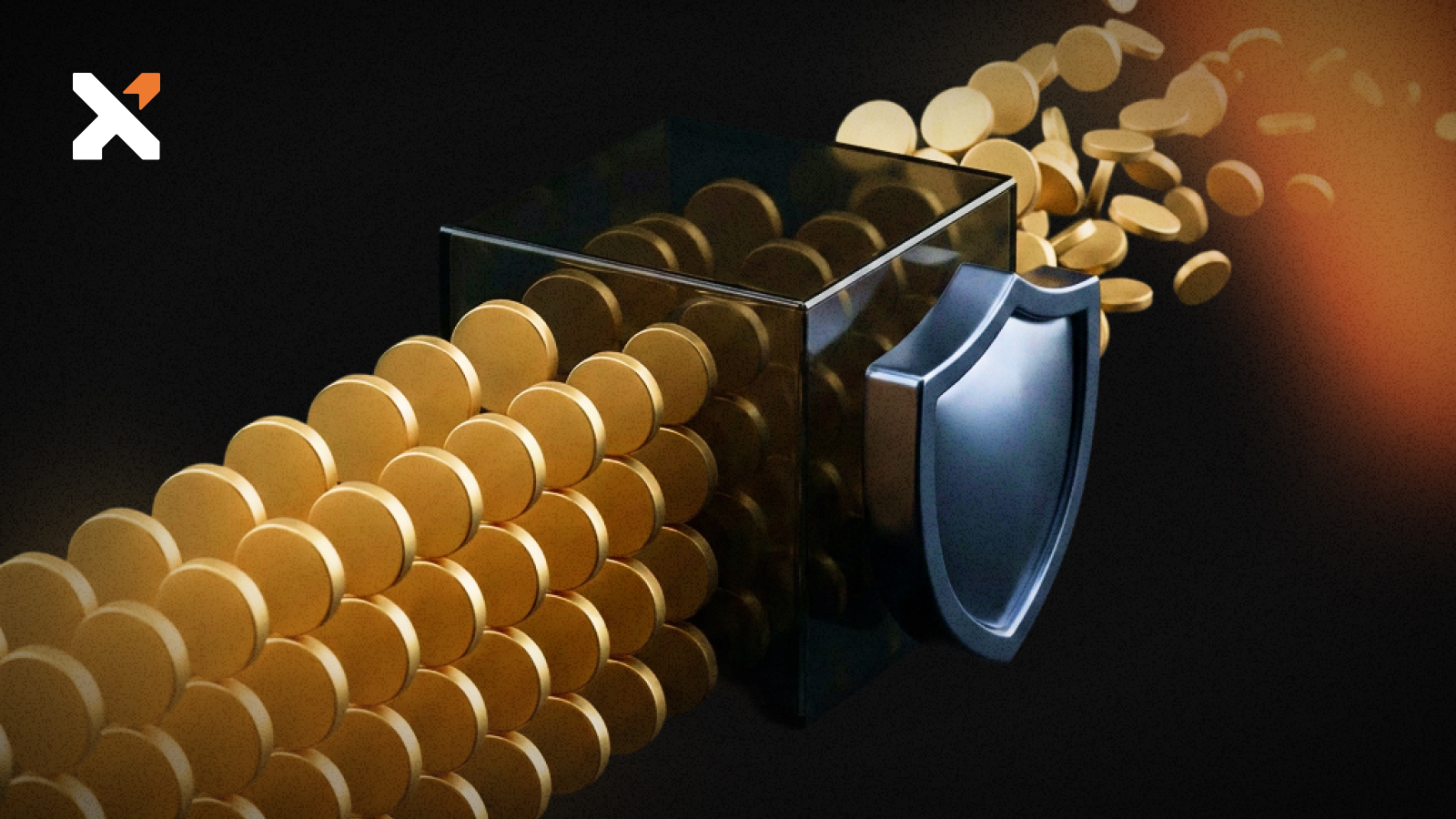
On a high level, this works by having users move their tokens into a shielded pool. Balances and transactions are hidden from public view, while zk-proofs verify transaction validity without revealing the underlying data.
It's completely optional, and users can unshield to public state whenever they want or need to, for example, when interacting with non-private dApps.
Aside from placing users' sovereignty through privacy into their own hands, this upgrade comes with built-in quantum resistance. The underlying cryptography is post-quantum secure, which means that even any future quantum attacks are protected against by default.
In practice, the process is incredibly simple. Let's imagine that Alice receives 0.5 BTC on the Bitcoin mainnet. She decides to bridge it to strkBTC on Starknet, shield it, then send it in a private payment to Bob. The whole transaction, from the balance to the addresses included, is shielded from the public eye. Bob can then decide whether he wants to hold the balance shielded or unshield it to spend (or put it to work using Starknet DeFi.
In Ken Liao's words, "Starknet delivers the right shape for digital money: private balances by default, with verifiable proofs of legitimacy when needed."
strkBTC: Private Bitcoin Without Giving Up Self-Custody
strkBTC is a Bitcoin-backed asset on Starknet that combines Bitcoin's monetary properties with Starknet's privacy and programmability. It comes with optional privacy, where users can move between the shielded and unshielded states at any time.
strkBTC gives users privacy, lower fees, faster confirmations, and access to Bitcoin DeFi, all through the Starknet protocol, while being backed by real BTC. All of this is trust-minimized, so there's no need to trust a centralized custodian.
Finally, Starknet is connected to the lending protocol Vesu. Through this partnership, the same infrastructure that powers lending and borrowing on Starknet will eventually power private balances.
How to Use Bitcoin Privately With Xverse
Xverse is the leading self-custodial wallet for Bitcoin and its ecosystem, supporting Starknet's full feature set, which now includes the privacy update that introduces asset shielding. That means you can access the new opportunities offered by Starknet directly from your Xverse wallet.
The step-by-step process is very simple:
- Download the Xverse wallet: You can choose between a Chrome browser extension or a mobile app, available for both iOS and Android.
- Bridge BTC to strkBTC: Use the built-in bridge within the wallet. You can do this by clicking on BTC, then using the Convert feature, which lets you choose the network you want to bridge your BTC to.
- Use the Starknet asset view to access shielded features: You'll find everything you need in one easy-to-understand interface.
- Send, receive, and hold privately: Don't forget you can decide to shield or unshield your assets whenever you want to.
If you want to take your BTC spending to the next level, join the waitlist for the Xverse Card.
FAQs
What is strkBTC and how does it work?
strkBTC is a BTC-backed Starknet-based token that comes with optional privacy. It's built in a way that lets users choose whether they want to use it shielded (private) or unshielded (public). The token remains the same in both cases, while simply moving between the two states.
How does Starknet privacy compare to Monero or Zcash?
Starknet's privacy is optional, similar to Zcash, while Monero's privacy is built into the asset and you can't turn it off. The biggest difference is that Starknet's privacy is built to function as a Bitcoin layer, while both Monero and Zcash focus on their own tokens. In this way, Starknet has the potential to offer privacy to the biggest cryptocurrency by market cap.
Does Xverse have access to my private transactions?
No, Xverse doesn't have access to your private transactions. However, viewing keys allow selective disclosure when required, and an independent auditing function can review transactions in response to lawful or regulatory requests. This means that compliance is possible even while retaining privacy.
What is quantum-resistant cryptography and why does it matter?
Quantum-resistant cryptography is an approach to cryptography that takes into account the possibilities of quantum computing (which are still largely theoretical) and is built in a way that eliminates these risks. Quantum computing can theoretically unravel the complex cryptography used to secure Bitcoin and other blockchain networks. Quantum-resistant refers to the way protocols and features are built that negate these possibilities before they're even available.
How do I bridge Bitcoin to Starknet using Xverse?
To bridge Bitcoin to Starknet, click on Bitcoin in your Xverse wallet. Use the Convert feature, then choose the asset you want to bridge your BTC to. In order to use the new privacy features from Starknet, you'll want to bridge your BTC to strkBTC.


.svg)